Showing posts with label patriotism. Show all posts

7.10.2014

American Pie Love


Here is an enlightening insight into the way my brain reasons:
1. It is a fact that Pie is the best food known to man. 
2. The Fourth of July would not be the Fourth of July without Pie.
3. Logically, the only thing better than saluting a flag and singing about your flag and eating Pie is…eating Pie that is a flag! 

With this logic, and inspired by this idea, I rolled up my sleeves and dubbed myself Betsy Ross on the morning of the Fourth of July.  Since I am certain that all of you are as pie-crazed as myself, I'm taking you along for the ride! 

Start with your favorite pie crust recipe.  (Mikaela shared the best gluten free pie crust recipe in the world here!)  After chilling, roll it out and place in your pie pan.  Next, fold a strip of aluminum foil and place in the pie pan to section off about a quarter of the pan for the blue part. 

Now, measure out 5 cups of freshly-picked-from-your-garden raspberries and 2 cups of freshly-picked-from-your-friend's-garden (with permission of course) blueberries. 

In a separate bowl, combine sugar, cornstarch, nutmeg, cinnamon, and lemon juice (See full recipe at the end for amounts).  Add 2/3 of this mixture to the raspberries and 1/3 to the blueberries. 

Add another 1/4 to 1/2 cup of sugar to the raspberries, to taste (and taste, and taste!). 
Now for the fun part!  Pour the raspberries into the large section of the crust, and don't worry like I did when some juice seeped through.  When it's all done, you won't even be able to tell--I promise! 

Now pour the blueberries into the smaller section, and then don't forget to remove the aluminum foil!

Next, roll out your chilled top crust.  Cut 3 or 4 strips of dough about 1/4 inch wide. 

Use a star shaped cookie cutter to cut several stars. 

Place the stars over the blueberry section first, then lay the strips down, pinching the edges into your pie crust edge.  When it looks all purty, crimp your pie crust edge to take it over the top!

Now pose it for the camera!


After chilling the pie while the oven preheats, bake it at 400 for 15 minutes, then 375 for 45 minutes, or until the crust browns.  (Helpful tip alert: I was grateful that for once I remembered to put a cookie sheet under the pie in the oven, so I didn't have a mess to clean up!)

I'm fairly certain that first face means: Hold the bus--that is the best pie I have ever tasted!  

After adding a little of this and a little of that to create the pie I wanted, I was pretty pleased with my concoction if I do say so myself!

 With our bellies full of pie, we headed off to our park to watch the 20 minute fireworks spectacular along with some friends plus everyone else in town!


I hope you had a wonderful Fourth of July!  Beneath the joy of celebration and delicious food, this holiday always brings me to tears when I contemplate it.  For the reason I am free to worship Jesus, free to eat a pie with my family, and free to celebrate without fear is because of God's providence and because of patriots no older than me who loved freedom more than comfort. 

The Recipe
1 pie crust (both top and bottom crusts)  Recipe here
5 cups raspberries
2 cups blueberries
1/2 cup sugar
5 Tbs cornstarch
1/4 teaspoon ground nutmeg
1/4 teaspoon ground cinnamon
1 teaspoon lemon juice
1/4-1/2 cup sugar, to taste

Spread one chilled pie crust in pie pan and keep the other one in the refrigerator.  Section off 1/4 of pie with aluminum foil for the blue section.  

Measure berries into two separate containers.
Combine sugar, cornstarch, spices, and lemon juice.  Add 2/3 of mixture to the raspberries; add the remaining 1/3 to the blueberries.  Add 1/4 to 1/2 cup more sugar to the raspberries, to taste.  Mix well.

Pour raspberries into large section of pie.  Pour blueberries into the smaller section.  Remove aluminum foil.

Roll out remaining crust and cut about 4 strips about 1/4 inch wide.  Cut about 5 stars with a star shaped cookie cutter.  Place the stars over the blueberry section first, then lay the strips down, pinching the edges into your pie crust edge.  Crimp pie crust edge.  

Chill pie in refrigerator while oven preheats to 400.  Bake at 400 for 15 minutes, then at 375 for 45 minutes or until golden brown.  

Let cool, then enjoy!

5.06.2014

Jury Duty


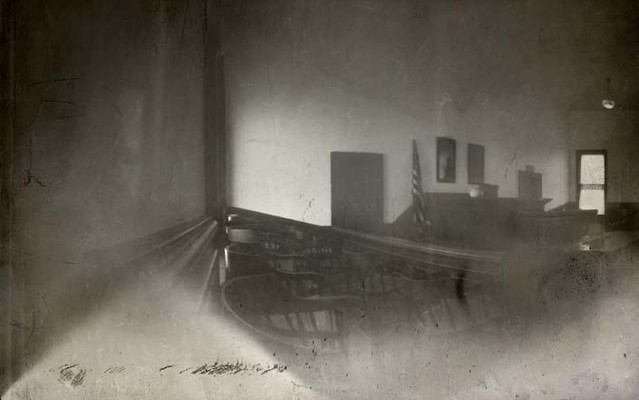
I clicked on the website and scanned the text for the seventh time in the last two weeks. Eagerness filled me when I saw my group number and realized that I was being called in the next day for potential jury duty! I researched tips for getting picked for a jury (because if I was going to cancel all my music students for the day, I certainly did not want to be sent home without having served!). I laughingly picked out my outfit the next morning ("low-key with a hint of liberalism") and joined 30 others waiting in a warm room. I was grateful for Joel's suggestion to bring a book, but the hour-and-a-half of waiting dimmed my enthusiasm for the day.

It soon brightened again, however, as we were called into the courtroom, met the judge and attorneys, and began answering dozens of questions. The judge graciously explained the process to us, and he informed us that Alexander Hamilton wrote in the Federalist Paper 83: "The friends and adversaries of the plan of the [constitutional] convention, if they agree in nothing else, concur at least in the value they set upon the trial by jury; or if there is any difference between them it consists in this: the former regard it as a valuable safeguard to liberty; the latter represent it as the very palladium of free government." I needed no further convincing. As misaligned and grumbled about as jury duty is, it is still a powerful means of fulfilling the Constitution and the "radical" views of liberty and self-government upon which our country was founded.

For reasons unbeknownst to me, I was one of the chosen twelve (I'm sure it was my attire!)--the youngest on the jury of six men and six women. The trial lasted through the next morning, and shortly before noon, we convened to deliberate over a working lunch. This was the first time we'd been allowed to discuss the case together (or with anyone), so we pulled together our notes and the exhibits admitted as evidence and began to talk through what had happened.

We had a man named Patterson (the defendant) who had a shady past. Now, 30 years old and four years from his last conviction, he seems to be doing well. He has moved to our county, gotten engaged, and works odd jobs doing construction and roofing. But four months ago, he was caught on the roof of a vacant for-sale house with his hands on a window (albeit a window too small to fit in). And as he nervously gets off the roof and tells the home owner's friend that he is a roofer, a woman slinks around the house and jumps into Patterson's truck.The two quickly drive off, leaving a back door ajar, a pile of wood in disarray, and the hose unwound. 

Was Patterson an idiot or a burglar? Did his friend truly just drag him there for the view and did he truly just get on the roof to inspect it and try to land a job, as he claimed? Or was he caught in the nick of time after being pulled into his friend's scheme to burglarize a home that had sat empty for an entire year? Could we, beyond reasonable doubt, know that he was guilty of attempted burglary--of intending to burglarize the home?

These are the questions my fellow juror and I wrestled with. Along the way we confronted our ideas about responsibility, trespassing, "youth these days," and any number of preconceived notions. For the lawyers picked 12 people with opinions, minds, and pasts--and like it or not, we each brought bias to the table. We did our best, however to be impartial in deciding, and we talked for close to two hours before everyone was convinced of his guilt...except me.

They kindly listened to my concerns, shared their thoughts. We talked about the trial, we got off on tangents about animals surviving being run over. We talked some more; we thought some more. All the while, my mind raced. Could I know, beyond reasonable doubt, that this man was guilty--that he intended to burglarize the home? It soon became evident to me that I could know--and I did know. And finally satisfied that I had done my duty, I agreed to declare Patterson "guilty."

Back in the court room, as the verdict was read and Patterson's fiance rushed from the room, and his family members sat in stunned shock, and Patterson's eyes filled with tears, I too felt sorrow. The old excitement drained away and the annoyance at waiting seemed petty. Hearing from the judge later on that Patterson would likely be sentenced for four to seven years for his wrong choice was heavy, and when I got into my car that afternoon, I began to cry. I cried for Patterson and his family and prayed for their salvation. I cried because of the responsibility I felt in declaring a man "guilty." 

The home owners were vindicated that day; Patterson was called to accountability that day. And I learned a lesson that day. Jury duty is inconvenient, difficult, annoying, or emotional at times. It is also important. For as Thomas Jefferson said, "I consider trial by jury as the only anchor yet devised by man, by which a government can be held to the principles of its constitution." Someone get me an "I Served Jury Duty" sticker, because I'm proud to have been a part of the Constitutional process!


Photo Credit

2.18.2014

The Traitor Within


This is the storyline novels are made of: Ultimate sacrifice for one’s country.  A life motivated by the need to restore the once-respected family name that your alcoholic father tarnished.  True love and bitter loss.  Military genius and heroism.  Secret letters with codes written in invisible ink made from onions.  The ultimate betrayal.  The greatest ignominy.

Only the book I just finished reading was no novel. 

Instead, it was the true story of the man who, in the American War for Independence, was one of the greatest American heroes.
This was the man who realized that if the patriots were to be victorious they needed cannons, thought outside the box, and captured Fort Ticonderoga in order to obtain the needed cannons.
This was the man who, while recovering from a battle wound, could think of nothing else but the next move the Americans needed to make and planned an invasion of Canada.  He led 1200 volunteers through hundreds of miles of impossible wilderness, enduring flash floods, early snow, inaccurate maps, desperate famine, and painful deaths with a stamina and courage almost unmatched in history.  When that campaign ultimately failed, he was the last to embark on a boat headed to safety, selflessly sending all his men to safety first.
This was the man who, against the orders of superiors, dashed out into a losing battle and changed the tide for the American patriots, securing victory in that battle and campaign, and by domino effect, the aid of France which ultimately turned the tide in the entire war against the British Empire.

The book I just finished reading, The Notorious Benedict Arnold: A True Story of Adventure, Heroism & Treachery (which I highly recommend as an easy but fascinating and page-turning read!), concluded with this profound statement on the man himself:

“If Arnold had died from his wounds at the Battle of Saratoga, we would think of him today as one of the all-time great American heroes.  Aside from Washington, we’d say, he did more to win our Revolution than anyone.  We’d celebrate his life as one of the best action stories we have—Washington never did anything half as exciting as the march to Quebec or the Battle of Valcour Island.  Sure, we’d say Arnold was unstable, tormented, a loose cannon.  But he’d be our loose cannon.  We don’t say any of that, and it’s all Arnold’s fault.  But still, it’s all true.” 

Benedict Arnold’s epic life proved that he was brilliant, brave, and heroic.  But he was also stubborn, volatile, and craved one thing more than anything else: recognition. 
Praise and promotion was the coin with which he traded. 
Applause was the language he understood. 
Honor was the motivation behind the man.

When he didn’t get it, he was willing to betray his friends, his family name, his cause, his life, and his country, and he somehow convinced himself that he was justified in so doing. 
As one who is very much driven by encouragement, praise, and pleasing others, I can easily relate to Benedict Arnold’s disgruntlement when America passed him over for admittedly deserved promotion in the army.  But I can’t help but reflect on the irony of his life’s legacy.

If Benedict Arnold had died in his greatest achievement on the battlefield, he would have died a hero’s death. 
If he had served quietly and humbly, regardless of political enemies and lack of acknowledgement, he would have lived a hero’s life. 
But in following his greatest achievements with the greatest of betrayals, he lived and died only one thing in the minds of all Americans: a traitor of reprehensible proportions.

Thus it is true that the quiet, humble service in between the podiums and the trophies and the battlefields is the most telling, the most illuminating, and the most defining moment of all. 
For an ordinary hero unrecognized and unknown is still a hero. 
But a self-infatuated hero unrecognized and unknown is already a traitor.  


Photo Credit: Carl Jones

11.13.2012

Grasshoppers, Elections, and One Very Special Email

Blowing in the Wind


A week ago today I could not shake the feeling that November 6, 2012 was a day that my children’s children would look back on and say, “That day was the beginning of the real end of America.”
 
From my perspective in the spiritually dark Washington state, things could not get any worse after this year's presidential election.  Voters here legalized recreational marijuana, legalized homosexual marriage, elected a slate of anti-God leaders, and voted to re-elect the most liberal president of all time.  It would be a true statement to say that I was depressed after voting in my second presidential election. 
 
And then I thought to flip back in my journal four years ago to the night of my first presidential election, and what I read from my eighteen-year old’s heart brought tears to my eyes.  I share the gist of it with you here with the hope that it will encourage your heart:
 
Someday every knee will bow to Christ and every stammering tongue will confess His Lordship.  I, though I so often resist my Lord, will bow.  Barack Obama will bow.  The vilest murderer on death row will bow. 

Isaiah 40:21-23 and 25 tell the story:


“Have you not known? Have you not heard? Has it not been told you from the beginning? Have you not understood from the foundations of the earth?  It is He who sits above the circle of the earth, And its inhabitants are like grasshoppers, Who stretches out the heavens like a curtain, And spreads them out like a tent to dwell in.  He brings the princes to nothing; He makes the judges of the earth useless….‘To whom then will you liken Me, Or to whom shall I be equal?’ says the Holy One.”

 
This election then is simply another step in grasshopper-man’s millenia-long plod of sin.  And God, He knows. 
 
Not a baby can be murdered without God’s knowledge.  I weep as I write that.  Yet does not God sob before He welcomes a precious little one to His safe arms?  Does not God care more than I ever could?

Yes.
 
Then I rest, not in the wisdom of the American people, but in the omniscience of God.
I rest, not in the power of my vote, but in the omnipotence of God.
I rest, not in the shortness of Obama’s term, but in the infinity of God.
I rest, not in vindictiveness towards the president-elect, but in the mercy of God.
 
I find my haven next to that unwanted baby who now feels the warmth of God’s unconditional love.  I put my hands into the palms of God’s; I place my feet on His.

I cry, “I am as big a sinner as Barack Obama.  I do not know Your plan, but if You would use him to judge my nation, I beg that You would use me to bless it.”


I went to sleep last Tuesday night with this prayer on my lips, and later on Wednesday morning was greeted with this email from my father to his family:
 
“As I was walking into my office this morning, I was blinded by a ray of sunlight breaking through the cloud-filled sky. 
  

‘Through the Lord’s mercies we are not consumed, Because His compassions fail not.  They are new every morning; Great is Your faithfulness. {Lamentations 3:22-23}’

"As I turned my gaze to the sky, there in the western horizon was a beautiful brilliant rainbow, radiating in vivid color.  My thoughts turned to the promises of Genesis 9:16 and Isaiah 59:19:
 

‘So shall they fear The name of the Lord from the west, And His glory from the rising of the sun; When the enemy comes in like a flood, The Spirit of the Lord will lift up a standard against him. {Isaiah 59:19}’”

Yes, the first Tuesday in November was a dark day.  But not for Christ-followers. 


Photo Credit: h.koppdelaney
Scripture taken from the New King James Version. Copyright © 1982 by Thomas Nelson, Inc. Used by permission. All rights reserved.

3.30.2012

Monumental: A Movie Review


What is wrong with our country?  Tolerance is advocated for everyone except for the intolerant, the lie of separation of church and state is propogated to the extreme, and America is headed, in Kirk Cameron’s words, “to hell in a handbasket.”  Out to tackle this very subject is Kirk Cameron’s new documentary Monumental, which I was able to see on Tuesday with Mama, Mikaela, and Sarah.  We drove an hour to to attend a thrillingly sold-out showing, and it was so worth it. 

Once we were settled down in the only remaining seats—the front row—and the movie began, I wondered what we were in for.  In the first few minutes, Kirk drove the point home that something is “sick in the soul of our nation.”  It was a bleak first few minutes. 

But then he delved into the heart of the movie: a quest to go back in time, to search out like buried treasure the lives of the Pilgrims and the Founding Fathers, to discern what truly motivated them, and to discover what their vision for our country was.

Kirk Cameron journeyed to England, and I was able to see the beach where the sea captain betrayed the Separatists, the prison where they were held, and even the location where they lived in Holland.  As the best storyteller I have ever heard, a British historian, wove the story of the Pilgrim’s journey from just your average peasant to visionary country-founders, I got chills.  And I suddenly realized that the Pilgrim’s position in England bears many similarities with our position as Christians in America today.  This movie had my full attention. 

Kirk Cameron interviewed Marshall Foster, Paul Jehle, David Barton, and others.  He travelled across the ocean and across our nation.  In my favorite scene of the movie, he expressed to Marshall Foster his wish that the Pilgrims had left some sort of instructions for us on how they founded this country and what we should do if we ever found ourselves straying from their model.  In Kirk Cameron’s words, “Did they leave us the secret sauce recipe?”  “Oh, they did!”  Marshall Foster replied.  “But no one knows about it!”  Indeed, the largest solid-granite monument in the United States is “hidden” in a residential area, but I had no idea such a thing existed, even though I have been to Plymouth. 

Joshua 4:6-7 describes a very similar memorial:

"That this may be a sign among you when your children ask in time to come, saying, 'What do these stones mean to you?' Then you shall answer them that the waters of the Jordan were cut off before the ark of the covenant of the LORD; when it crossed over the Jordan, the waters of the Jordan were cut off. And these stones shall be for a memorial to the children of Israel forever."


When the documentary ended, it was with hope, as Kirk Cameron rose from the chair he had been sitting in at the beginning and pledged, “As for me and my house, we will serve the Lord.”  He put the challenge to us in unequivocal terms, and I left not inspired, but compelled to do something, and to ensure the lies of revisionist historians never win out over the true history of our country. 

The documentary was professional, with a contemporary style of cinematography, and it was easy to follow and understand.  The only thing that belied the professionalism was the soundtrack.  Its repetition, lack of subtlety, and overuse of the electric guitar annoyed me as a musician, to say the least.  But it wouldn’t keep me from seeing the movie. 

At first, as Kirk Cameron was recounting the story of the Pilgrims (much of which I already knew) and how he never learned any of it in public school, I began to worry that the whole movie would be only a review of what I already knew.  But he quickly proved my fears groundless as the documentary took off and I began to see even what I thought I already knew in a new light! 

Every Christian American needs to see this movie.  Go here to watch the trailer and find out if it is opening tonight in a theater near you.  If not, click on “demand the movie” on the sidebar of the Monumental website, and enter your zipcode.  With enough votes, the movie will come to your city!  (In fact, my zipcode only needs four more votes, so please vote, friends that live near me!) 

"Resistance to tyranny becomes the Christian and social duty of each individual. ... Continue steadfast and, with a proper sense of your dependence on God, nobly defend those rights which heaven gave, and no man ought to take from us."

 --John Hancock, History of the United States of America, Vol. II, p. 229.


10.04.2011

Standing Fast

Dietrich Bonhoeffer: Part Two

It was a muggy summer’s night. On a beautiful estate in Connecticut, the entire family was asleep, save for one guest, whose light still shone brightly through the window and mingled with the thousands of fireflies flitting about outside. Inside, Dietrich Bonhoeffer was journaling and pondering what had brought him to America in the first place.


He had spent the years since his last visit to the United States in a constant battle against the National Socialist Party. In between teaching and discipling his students at the University of Berlin and successfully teaching a rowdy confirmation class of fifty poor hooligans, the small compromises asked for by the Nazis kept getting bigger and bigger. And so he had fought—the boycotting of Jewish businesses, the burning of “un-German” books, the purging of the Old Testament from Christianity (as if!), the rigged church elections placing Nazis in many key church positions, and the Aryan paragraph allowing only Aryans to hold church office.

And when it became clear that there was no saving the German church, he had aided in the birth of a new church, the Confessing Church, emerging like shining gold from a pot of dross. He had spent several years pastoring a church in England and making good use of the microphone the Free World gave him. And after returning to Germay, he had begun an illegal seminary to educate and train men to lead the Confessing Church.


“Real faith and love were identical for [Dietrich Bonhoeffer]. Here was the very heart and core of the existence of this highly intellectual Christian. We felt it in the improvised prayers of the morning and evening devotions; they sprang from the love of the Lord and of his brethren[1].”
Bonhoeffer soon found himself in an impossible situation—he knew that it was only a matter of time before he was drafted into Hitler’s army, but he also knew that there was no way he could fight for Hitler’s cause. To refuse meant execution. While he did not blame anyone who submitted to the draft, Dietrich knew too much about the real situation of things for his conscience to allow him to fight for such evil.


Bonhoeffer with his parents.
So he had ended up here, in America, to do great things ministering with German refugees in the United States. But now, relaxing at a friend’s country house, he was all unease and fretfulness.

“15th June, 1939—This inactivity, or rather activity in unimportant things, is quite intolerable when one thinks of the brethren and of how precious time is. The whole burden of self-reproach because of a wrong decision comes back again and almost overwhelms one. I was in utter despair [today][2].”

Leaving behind the insanity and darkness of Germany for the freedom and ease of America would be an easy choice for most. Life versus certain death were the fates at the end of either path. Dietrich was not concerned, however, with ease, or life, or freedom, but rather with being in the center of God’s will. “His place was by the side of his hard-pressed brethren and disciples in the ministry and with his own family which was increasingly drawn into the battle between Christ and Antichrist[3].” Bonhoeffer arrived back in Berlin only five days before the attack on Poland, which effectively began World War II.

Although Bonhoeffer continued to write and teach, the Gestapo’s harrassment became increasingly more intense, and with that, options were becoming more limited. Soon, however, a new opportunity presented itself; the Abwehr, a German Military Intelligence agency wanted to make use of him. Dietrich would officially be a Nazi agent, and the Nazis would allow him to continue his pastoral work as a “front” for his Nazi work. Unofficially, however, Dietrich was actually spying on the Nazis and working against the Third Reich[4].


Meanwhile, Bonhoeffer had fallen in love. Through the unique older woman, Ruth von Kleist-Retzow, whom he had known as an aristocratic neighbor of his seminary, Dietrich met her granddaugther, Maria von Wedemeyer. Maria was just eighteen, while Dietrich was thirty-six, and so he kept quiet about his attraction through the summer and autumn of 1942. During that time both Maria’s father and brother were killed in the war, and Dietrich comforted the family as a pastor and friend. Somehow, though, Ruth von Kleist-Retzow decided to play matchmaker and let the cat out of the bag. Once rung, the bell could not be unrung, no matter how inappropriate the timing, and by January 17, 1943, Dietrich and Maria were engaged.

“Dear Pastor Bonhoeffer,
I’ve known, ever since arriving home, that I must write to you, and I’ve looked forward to doing so….
“But because I have experienced that you understand me so well, I now have the courage to write you, although I actually have no right at all to reply to a question you have not even asked me. Today I can say Yes to you from my entire, joyful heart….
Yours, Maria”


Maria von Wedemeyer
Their joy was shortlived, however. Maria asked that they wait six months, not communicating with or seeing each other during that time. But on April 6, 1943, Bonhoeffer was arrested by the Gestapo. The Third Reich smelled a conspiracy, but couldn’t quite implicate Bonhoeffer, especially with his well-connected friends, and so he spent the next year and a half at the Tegel military prison, feigning innocence about the whole thing, writing, reading voraciously, and befriending almost everyone he met.

Everything fell apart July 20, 1944 with the failed Valkyrie plot to assassinate Hitler. A livid Fuhrer rounded up hundreds of spies and their family members—anyone remotely connected to the plot and the Abwher. Bonhoeffer’s involvement was discovered also, and from then on, his days were numbered. On April 9, 1945, Dietrich was hung, only two weeks before US soldiers liberated the camp.

“He had hardly finished his last prayer when the door opened and two evil-looking men in civilian clothes came in and said:
‘Prisoner Bonhoeffer. Get ready to come with us.’ Those words ‘Come with us’—for all prisoners they had come to mean one thing only—the scaffold.
We bade him good-bye—he drew me aside—‘This is the end,’ he said. ‘For me the beginning of life[5].’”
Bonhoeffer, second from the right, at the Tegel prison.

Dietrich wrote often of death in his prison cell—he called it “the supreme festival on the road to freedom[6],” because, for him, death was “sweet and gentle; it beckons to us with heavenly power, if only we realize that it is the gateway to our homeland, the tabernacle of joy, the everlasting kingdom of peace. How do we know that dying is so dreadful? Who knows whether, in our human fear and anguish we are only shivering and shuddering at the most glorious, heavenly, blessed event in the world[7]?”
Look for a review of the New York Times Bestselling book, Bonhoeffer: Pastor, Martyr, Prophet, Spy by Eric Metaxas next week!


[1] Zimmerman and Smith, editors. I Knew Dietrich Bonhoeffer, 134. Translated by Kathe G. Smith. New York: Harper and Row, 1966.
[2] The Way to Freedom: Letters, Lectures and Notes 1935-1939, vol. 2, Collected Works of Dietrich Bonhoeffer, edited by Edwin H. Robertson, translated by Edwin H. Robertson and John Bowden (New York: Harper and Row, 1966), 228-229.
[3] Cresswell, Amos and Maxwell Tow, Dr. Franz Hildebrant: Mr. Valiant for Truth (Grand Rapids, Smyth and Helwys, 2000), 223-27.
[4] Metaxas, Eric. Bonhoeffer: Pastor, Martyr, Prophet, Spy: A Righteous Gentile vs. the Third Reich. Nashville: Thomas Nelson, 2010, 370. 
[5] Best, S. Payne. The Venlo Incident. Watford, Herts: Hutchinson & Co., 1950, page 200.
[6] Robertson, Edwin. The Shame and the Sacrifice: The Life and Martyrdom of Dietrich Bonhoeffer, (New York: Macmillan, 1988), 370-372.

7.12.2011

The Sky is Rising!

Chicken Little never seems to go away—there is always someone, somewhere crying out that the sky is about to cave in. I feel like Chicken Little every day when I think about America—when I look at our unfathomable debt, the swindle that is Social Security, and the increasing depravity of the citizens. And then I realize that there is hope.

With the 2010 Census results recently released, there came a shocking prediction: by 2023, minorities—everyone except for non-Hispanic, single race whites—will account for more than half of all children, and by 2042, minorities will become the majority. By 2050, the 65 and older group will have more than doubled. The Hispanic population is expected to triple, with black and Asian people groups growing steadily as well. In 40 years’ time, the non-Hispanic, single race white population will increase only very slightly, and the total share of the population will drop from 66% of the population to 46% [1].

In 2050, we will be living in a very different America. Or will we? While superficial things like the color of people’s skin, or the number of Mexican restaurants on a block, or holidays and traditions might change, it will only be because the United States is continuing in a grand tradition of building a country out of international immigrants. The skin color of the 21st century immigrants has changed, but the principle remains the same.

In fact, these immigrants are our country’s only chance of survival. While the long-established American citizens are busy pursuing the “American Dream” and having 2.06 children in their lifetime—barely enough to maintain the population—immigrants, and Hispanics specifically, are having larger families. Because of this, our population of 15-to-64 year-olds between now and 2050 may grow as much as 42%. And while critics complain about overpopulation, many countries in the rest of the world will be in deep distress by 2050. According to a recent Smithsonian article, “the number of young and working-age people is expected to decline elsewhere: by 10 percent in China, 25 percent in Europe, 30 percent in South Korea and more than 40 percent in Japan [2].”

The U.S. population growth, at .96 %, is certainly not impressive, but compared to Europe, it is huge. At quadruple that of Denmark, triple that of Belgium, double that of Great Britain and France, and larger than Canada, the United States is one of the only great nations in the world set to grow, rather than decline. Russia and Japan are already negative in their growth rate [3].


So what does all this mean? It certainly does not give us reason to continue in the status quo, grateful that there will actually be someone after us to clean up our mess. The projected 458 million US citizens in 2050 should inspire all 308 million of us in 2011 to work harder, with greater vision and clarity. To give up now, with great sighs of devestation, and loud declarations of our country’s doom, is cowardly. To laugh at our debt, shake our head at elections, and wring our hands over the spiritual state of our nation is foolish. America is not dead—America is growing, thanks not to her citizens, but to her immigrants. It is up to us to ensure that America grows strong and solid in the next forty years, remaining a power to be reckoned with in the world, but more importantly, becoming once again a beacon of Christian charity, love, and freedom to the countries around us.

 
Photo taken by Amanito. Used with permission.

[1] “An Older and More Diverse Nation by Midcentury.” August 14, 2008. U.S. Census Bureau. http://www.census.gov/newsroom/releases/archives/population/cb08-123.html


[2] Kotkin, Joel. “Ready, Set, Grow.” Smithsonian, Vol. 41, No. 4: July/August 2010.


[3] The World Factbook 2009. Washington, DC: Central Intelligence Agency, 2009.
Blog Widget by LinkWithin