Showing posts with label history. Show all posts

6.23.2015

Married to a Traitor

Benedict Arnold, the most infamous traitor in American history, did not act alone.

thEiR diFferENceS

For in his charming, young, well-connected, and Loyalist wife, Margaret "Peggy" Shippen, he had his co-conspirator. Passionate Tory she was, but that is not the whole story. However much we'd like to convict her of some grand conspiracy to trap a colonial general with her wiles, marry him, and then lead him into treachery, the story may very well be a less sinister one: man and woman fall in love, marry, and woman influences man. Regardless of motive, this we do know: Peggy's influence—unconscious or deliberate—helped to change a Patriot war hero into a Loyalist traitor.

"He had, let it be remembered, no domestic security for doing right - no fireside guardianship to protect him from the tempter. Rejecting, as we do utterly, the theory that his wife was the instigator of his crime - all common principles of human action being opposed to it - we still believe that there was nothing in her influence or associations to countervail the persuasions to which he ultimately yielded. She was young, gay and frivolous; fond of display and admiration, and used to luxury; she was utterly unfitted for the duties and privations of a poor man's wife. A loyalist's daughter, she had been taught to mourn over even the poor pageantry of colonial rank and authority, and to recollect with pleasure the pomp of those brief days of enjoyment, when military men of noble station were her admirers. Arnold had no counselor on his pillow to urge him to the imitation of homely republican virtue, to stimulate him to follow the rugged path of a Revolutionary patriot. He fell, and though his wife did not tempt or counsel him to ruin, there is no reason to think she ever uttered a word or made a sign to deter him [1]."

The story is really not a new one. It's the same one that played out in Eve with Adam and Sarah with Abraham. Those women of old, and countless women since then, sabotaged the course of their own lives, the lives of their husbands, and the lives of innumerable others through one small choice or suggestion. And while Adam, Abraham, and Benedict all clearly bear the responsibility for their sin, the role of their wives in their sin is unmistakable.


I may never deliberately manipulate my husband. I may never consciously encourage him to sin. But the fact remains that I have the chief influence in my husband's life, and if I act or speak out of fear, selfishness, or pride, I could very well aid my husband in sin.

"If Benedict Arnold had died in his greatest achievement on the battlefield, he would have died a hero’s death....But in following his greatest achievements with the greatest of betrayals, he lived and died only one thing in the minds of all Americans: a traitor of reprehensible proportions (from Lauren's excellent post The Traitor Within)."

Even ascribing the best of intentions to Benedict Arnold's wife and recognizing the responsibility Benedict bears for his own choices, Peggy likely could have been the difference that made her husband a hero instead of a persona non grata. I'm painfully green at this wife business, and history is just another reminder to me of how considerable my influence is in my husband's life. How desperately I desire for his heart to safely trust in me, with him knowing that my influence is for good and not evil! (Proverbs 31:11-12)



[1] Griswold, Rufus W., William Gilmore Simms, and Edward D. Ingraham. "Major-General Benedict Arnold." Washington and the Generals of the American Revolution. Vol. 1. Philadelphia: Carey and Hart, 1848. 264-65. Google, 2 July 2007. Web. 23 June 2015.

Photo Credit
Photo Credit
Photo Credit

11.12.2014

Gullible


Did you know that Shakespeare didn't actually write Shakespeare? That, in fact, he isn't the author of Romeo and Juliet and Hamlet and every other piece of writing attributed to him? The first time I realized this was when I was taking my SAT years ago. The essay question was on this very subject, and I found it fascinating, but never got around to researching it further. I saw, a few years later, that a movie had come out about the same topic (but never bothered to watch the film). And so a seed of doubt was planted. Based upon two very small pieces of information, I believed that there was definitely reasonable doubt as to Shakespeare's authorship.

It wasn't until last week, as Joel and I looked through the decade-old pictures of a trip he took to Great Britain with his family that I voiced aloud my doubt when we reached the photos commemorating his visit to Shakespeare's house. He looked at me with great amusement, and I realized to my consternation that I didn't know anything for certain. Research was definitely in order.

What did I find? Well, there is indeed loud controversy surrounding who wrote Shakespeare's creations. There's been many books on the subject, organizations formed, movies made, Wikipedia articles created, and more. And yet, the first suggestion of such a trick being played upon the whole world did not occur until 1857--241 years after Shakespeare's death! No contemporary of Shakespeare ever suggested such a masquerade; no written evidence has been uncovered corroborating the controversy; and the leaps of logic required to reach such a conclusion (certain bits of the plays match events in Francis Bacon's life, or Walter Raleigh's life, or--most recently popular--Edward de Vere's life) are hotly contested by academia. Indeed, award-winning scholar William Hunt said, "No, absolutely no competent student of the period, historical or literary, has ever taken this theory seriously. First of all, the founding premise is false -- there is nothing especially mysterious about William Shakespeare, who is as well documented as one could expect of a man of his time. None of his contemporaries or associates expressed any doubt about the authorship of his poems and plays. Nothing about De Vere (Oxford) suggests he had any great talent, and there is no reason to suppose he would have suppressed any talents he possessed [1]."

I had to laugh at myself for so glibly assuming such a conspiracy to be true, and to wonder at the people who are so avidly attempting to rewrite history while blindly ignoring facts, evidence, and truth.

And yet, I shouldn't be so surprised. A very many people do the exact same thing with God and His Word. 

"For since the creation of the world His invisible [attributes] are clearly seen, being understood by the things that are made, [even] His eternal power and Godhead, so that they are without excuse, because, although they knew God, they did not glorify [Him] as God, nor were thankful, but became futile in their thoughts, and their foolish hearts were darkened." {Romans 1:20-21 NKJV}

There are those who--like I did with Shakespeare--need only a few suggestions about evolution and the impotence of a god to believe the alternate theory that the world created itself or that Scripture is a literary gem, but not authored by God. They may not realize that "I choose to believe the Bible because it is a reliable collection of historical documents, written by eyewitnesses during the lifetime of other eyewitnesses. They report supernatural events that took place in fulfillment of specific prophecies, and they claim to be divine rather than human in origin [2]," as Dr. Voddie Baucham so brilliantly put it.

The good news is that many of these people are no more truly educated in the matter of spiritual things than I was about Shakespeare. It may take only a look--only a question put in love, to cause them to reconsider the lie they have so unconsciously believed. It may take only a statement to cause a lifetime of assumptions to vaporize.


New King James Version, © 1982 by Thomas Nelson, Inc. All rights reserved. Used by permission.
[1] Blakemore, Bill. "'Anonymous': Was Shakespeare a Fraud?" ABC News. ABC News Network, 14 Oct. 2011. Web. 12 Nov. 2014.
[2] Baucham, Voddie. "Why I Choose to Believe the Bible." The Ever Loving Truth. 30 June 2005. Sermon Audio. Web. 12 Nov. 2014.

6.17.2014

Alone, Yet Not Alone: A Movie Review

A Guest Post by Joel

Brutal. That's perhaps the best adjective to describe living on the western frontier of the American colonies in 1755. And that's exactly the feel you get from the newly-released historical adventure film, Alone, Yet Not Alone. Filmmakers Ray Begnston and George Escobar pull no punches depicting the extreme brutality of frontier conflict between European settlers and the tribes of the American wilderness. Only 15 minutes into the film, the patriarch of the Leiningers, a German immigrant family freshly settled in rugged Pennsylvania, is murdered with his son in their family's cabin. And it doesn't get much prettier from there. Burnings of buildings (and of people), close-combat fighting with bayonet and tomahawk, and scalps (without the scalpings) are all part of the story, easily earning this film it's PG-13 rating. But the violence is tastefully portrayed, and is largely without gore.

Barbara comforts Regina
The strongest point of the film lies with the historical account it vividly depicts. The tale is incredible: two sisters (and some friends along the way) abducted by fierce Indian warriors manage to survive and adapt to the lives of their captors for several years, ultimately, in different locations. After a 10-year separation, the remaining Leininger family members are reunited by the film's end. This truly is a Providential event, marked by a family's deep faith in God, and commitment to one another in the face of tremendous adversity. 

A tender moment
But the story’s decade-long time frame becomes a hindrance for modern filmmakers. Attempting to capture such a lengthy historical sequence, complete with the political context of colonial America, is a tall order for a less than 2 hour production. As a result, the film tells a compelling story, but is short on character development. Many of the characters we hardly have a chance to get to know before they're either grown or dead. And in some ways, where the character development does happen, it ends up being a bit inverse to the storyline. For instance, the primary romantic element of the film is between Barbara (the older Leininger sister) and her Indian captor, Galasko, in whom we see a growing affection and tenderness for Barbara throughout her captivity. It is, however, ultimately the unthinkable marriage with her father and brother's killer that drives Barbara to flee her captivity. In her freedom, she is reunited with an old friend from the past, whom we hardly know, and they are engaged by film's end without any time for us to appreciate this rather abrupt courtship.

On the filming level, for a Christian, independent, lower budget movie, Alone, Yet Not Alone, has some great successes along with some notable stumbles. The numerous cast members delivered a mixed acting performance. Natalie Rascoosin excellently portrays the young Barbara. Kelly Greyson fairs alright in her portrayal as an older Barbara, though her appearance and mannerisms probably fit better in a modern chick-flick than a rugged historical piece. Ozzie Torres and Tony Wade made a very strong showing in their performances as the two main Indian characters. Portrayals of colonial military leaders such as Captain Armstrong, General Braddock, and George Washington are all solid, as is the rendering of Benjamin Franklin by Barry Bedwell.

Several minor roles are filled by individuals that many in the homeschooling community will recognize instantly. Victoria Edmonds, one of the stars of the pro-life film Come What May, plays the supporting role of Marie, one of Barbara’s fellow captives. Bret Harris, of the Harris
homeschooling dynasty, also plays a supporting role. The majority of the Doug Phillips family appears in the film, some members with somewhat substantial parts. One of Phillips’ daughters plays the role of an Indian girl who befriends Barbara, while the now disgraced Doug Phillips fills a cameo role as a British colonel. Phillips' noticeable presence in the film, along with that of the young woman now suing Phillips for sexual assault, Lourdes Torres (who appears as an Indian maiden), unfortunately hinders the film’s message, though the movie had been shot long before the Vision Forum scandal erupted late last fall.

Overall, the film’s cinematography and action sequences are impressive. A few blunders turn up (we see drops of water on the camera lens in one rapids scene, and in another, a man just slain breaths, making me wonder if he was going to revive in a few moments). Some sequences were surprisingly unpredictable; others became trite (by the third hunting sequence, we all knew that the camera wasn't actually going to show the animal being shot). The musical score by William Ross is simply beautiful, providing the film with a strong boost of excellence and authenticity. 

And that brings me to the hallmark of the film, the title song, "Alone, Yet Not Alone." Sung by the three Leininger women throughout the film (who each do a fantastic job), and ultimately performed by Joni Erickson Tada during the credits, this song captures the beauty of the story and will leave its message in the hearts of viewers, long after they've left the theater.

Alone, Yet Not Alone will be experienced by viewers differently. Some will be distracted because of how much they know about the recent turmoil in the homeschooling community; others will be critical of the mistakes and mediocrity of some aspects of the film. But others, and indeed, a good many, will be understandably moved and inspired by the story's message, and will recognize that this film shouldn't be scolded, but supported. It is a solid attempt in retelling tales that ought to be told, the true stories of our heritage as Americans and as Christians. And no matter what, each person will leave with the truth in their heart, that when we know Jesus--no matter what the circumstance--we're never alone. 

Joel is a man of vision, integrity, and loyalty who loves the Lord with all his heart. He's a home school graduate and an alumnus of Oak Brook College of Law and Government Policy, where he graduated magna cum laude. Born and raised in the Northwest, Joel now resides in Maryland where he works as a legal assistant and tries to keep his brilliant writing skills incognito. (He hasn't been successful at that or at keeping his speaking skills off the radio or at keeping his musical talent in the back row at church.) His writing ability, however, does not extend to composing bios, because his version of a bio leaves out all the aforementioned important details as well as other essentials like how amazing and smart he is. Good thing he has a fiancee to set the record straight!

2.18.2014

The Traitor Within


This is the storyline novels are made of: Ultimate sacrifice for one’s country.  A life motivated by the need to restore the once-respected family name that your alcoholic father tarnished.  True love and bitter loss.  Military genius and heroism.  Secret letters with codes written in invisible ink made from onions.  The ultimate betrayal.  The greatest ignominy.

Only the book I just finished reading was no novel. 

Instead, it was the true story of the man who, in the American War for Independence, was one of the greatest American heroes.
This was the man who realized that if the patriots were to be victorious they needed cannons, thought outside the box, and captured Fort Ticonderoga in order to obtain the needed cannons.
This was the man who, while recovering from a battle wound, could think of nothing else but the next move the Americans needed to make and planned an invasion of Canada.  He led 1200 volunteers through hundreds of miles of impossible wilderness, enduring flash floods, early snow, inaccurate maps, desperate famine, and painful deaths with a stamina and courage almost unmatched in history.  When that campaign ultimately failed, he was the last to embark on a boat headed to safety, selflessly sending all his men to safety first.
This was the man who, against the orders of superiors, dashed out into a losing battle and changed the tide for the American patriots, securing victory in that battle and campaign, and by domino effect, the aid of France which ultimately turned the tide in the entire war against the British Empire.

The book I just finished reading, The Notorious Benedict Arnold: A True Story of Adventure, Heroism & Treachery (which I highly recommend as an easy but fascinating and page-turning read!), concluded with this profound statement on the man himself:

“If Arnold had died from his wounds at the Battle of Saratoga, we would think of him today as one of the all-time great American heroes.  Aside from Washington, we’d say, he did more to win our Revolution than anyone.  We’d celebrate his life as one of the best action stories we have—Washington never did anything half as exciting as the march to Quebec or the Battle of Valcour Island.  Sure, we’d say Arnold was unstable, tormented, a loose cannon.  But he’d be our loose cannon.  We don’t say any of that, and it’s all Arnold’s fault.  But still, it’s all true.” 

Benedict Arnold’s epic life proved that he was brilliant, brave, and heroic.  But he was also stubborn, volatile, and craved one thing more than anything else: recognition. 
Praise and promotion was the coin with which he traded. 
Applause was the language he understood. 
Honor was the motivation behind the man.

When he didn’t get it, he was willing to betray his friends, his family name, his cause, his life, and his country, and he somehow convinced himself that he was justified in so doing. 
As one who is very much driven by encouragement, praise, and pleasing others, I can easily relate to Benedict Arnold’s disgruntlement when America passed him over for admittedly deserved promotion in the army.  But I can’t help but reflect on the irony of his life’s legacy.

If Benedict Arnold had died in his greatest achievement on the battlefield, he would have died a hero’s death. 
If he had served quietly and humbly, regardless of political enemies and lack of acknowledgement, he would have lived a hero’s life. 
But in following his greatest achievements with the greatest of betrayals, he lived and died only one thing in the minds of all Americans: a traitor of reprehensible proportions.

Thus it is true that the quiet, humble service in between the podiums and the trophies and the battlefields is the most telling, the most illuminating, and the most defining moment of all. 
For an ordinary hero unrecognized and unknown is still a hero. 
But a self-infatuated hero unrecognized and unknown is already a traitor.  


Photo Credit: Carl Jones

1.01.2013

Lord, Let Me Declare

Journal Entry

On my nightstand, one book has had the place of honor for a decade. This book, which began life as a charming black-covered creation with vivid red corners, is now a shabby stack of over 200 bound papers. The cover is long gone, the edges are curling, and the first ten pages have escaped the binding. This book, you see, began in the ninth year of my life, is my journal. Her name is Louisa, and here I offer you a look at my life through the last decade, complete with authentic spelling, punctuation, and grammar errors (oh, my!).


January 1, 2000, 12:00 AM
Happy Year 2000, Happy Millinium!!!! Happy Century!
Nothings happening. What I mean is, the lights are on and everything!!!
I feel…joyous!!

Wednesday, May 3rd, 2000
The Bird-duck is gone. Lauren brought it outside to play. A cat—Tigger actually—scared duck into the bushes. We’ve been looking for duck all evening. But I yielded duck to God. It’s God’s duck. And this is hard to say, even if God wants duck to die—that, that is alright.
 
Saturday, June 9th, 2001
…When Papa came home…he had a surprise for us—and it’s better than a birthday—the strike is OVER! I want to shout, to tell the world! Praise the Lord! So we’ve been enjoying our Papa for the week!

Sunday, February 3, 2002
So that my children will always know when I lost my last tooth!
I ask Mama and Papa when they lost there last tooth—same answer—“I don’t know.”
So I will always remember.
“I was 11, it was February the third, I was eating a carrot.” =)

Friday, May 10th, 2002
It’s born! It’s born!! Can you believe it? HE’S born! Jonah Adam (? They’re not sure about the middle name). He’s 6 lbs 15oz and 19”. Sounds small!

Tuesday, April 1st, 2003
I am quite disappointed with myself. I am horrid. And I don’t mean to give you the same old self-pitying ‘sob story.’ My main faults are 1. Lack of serving, 2. Lack of humbleness (i.e. pride, but ever so much more than that, like lack of respect etc, etc.) I am also extraordinarily bossy. It’s to bad you are not ‘real.’ If you were I would be begging you to pray for me! That is the only hope….

Sunday, May 4th, 2003
On Thursday we left for Spokane. Today we ran in Bloomsday! All year we’ve been training for it. It has about 60,000 people who run in the race…It is 7 ½ miles (12 kilometers) long and has “Doomsday” hill, which is a rather long steep hill. My time was 1 hour, 17 min and 56 seconds. We arrived 1 hour and 15 minutes before it started. It was cold, especially since we only had shorts and t-shirts on. To entertain themselves, people were bouncing balls in the air. Then they used tortillas!

Saturday, May 1st, 2004
I was thinking; why do I keep a journal? Well for one thing it is to record my growth in the Lord.
The main second reason is for my kids....It is my proof. I was a kid once to, with kid-struggles and kid-problems. Not only that, but I have lived through once-in-a-lifetime events (i.e. September 11 etc).
If my kids are ever reading this then I want to tell them something. I am only 13; perhaps your age. Only a kid; just like you…And across the decades that separate my childhood and yours—Jesus is the only way. Give him everything. Especially your conscience. After reading this, you must know that that is my biggest struggle. Remember that if you are ever convicted to confess something.
(Was that corny?)

Tuesday, February 21, 2006
Tonight was Philharmonic practice. Last week was chair tests, and I kept my principal second violin place! I’m really excited, and I think that the leadership position has really helped my playing and my confidence. Also, I’m really enjoying taking lessons from ---. Now, the only thing I need to complete my “musical bliss” is some music students. That would be a dream come true.

Thursday, April 6, 2006
…at the funeral today, someone….[read] a verse that she said Aunt Ina quoted; my eyes filled with tears when I heard it, and I resolved right then and there that that verse would be my life verse. Lauren just let me borrow her Bible, and I looked it up, so here it is:
“Oh God, You have taught me from my youth; and to this day I declare Your wondrous works. Now also when I am old and grayheaded, O God, do not forsake me, until I declare Your strength to this generation, Your power to everyone who is to come.” Psalm 71:17-18

Saturday, Aug 15, 2009
So another year has passed and it seems that I am suddenly and inexplicably nineteen years old….And then I realize that, in the blink of an eye, I will be gone. And you, dear reader, may be my daughter or son, my grandchild, or even my greatgrandchild, wondering at the impossibility of me being 19 with the same struggles, hopes, and dreams that you have.
Happy Birthday—and don’t take any of it for granted.


And there you have it. As of January 1st, 2010, 2:13 AM, I finally finished this book. She will live out the rest of her life in leisure while I turn to a new, slick, leather-bound, slim volume that's been waiting patiently for several years. Somehow, though, it just won't be quite the same.

Do you keep a journal? Have you ever kept one in the past? When I first began mine, I remember modeling it after those of the great men and women of faith, such as David Brainerd, whose personal accounts still inspire and convict centuries later. I certainly knew that I wanted my journal to have no resemblance to a catty, secretive, tell-all "diary." If you do write, are your purposes the same as this and the ones I mentioned in the entries above?


First posted here on January 5th, 2010.

9.25.2012

Honor

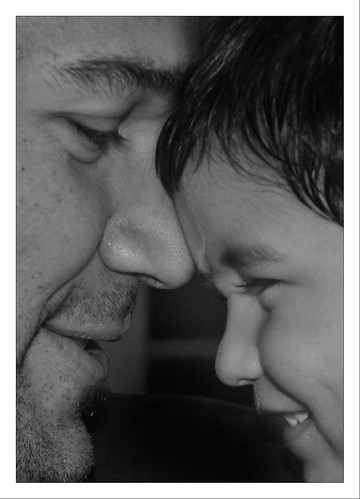
father and son
Father and son were laying beneath the starry sky. The boy kept opening his eyes wider and wider to avoid the fuzziness of sleep threatening him. So many things muddled his brain, that Kabad struggled to know how to begin with his father, or even if he should begin.

Finally, he rolled over onto his elbow, the forced movement bringing some alertness to his mind. "Father," he began timidly.

"Hmm..." Father replied softly.

"Why are we different?"

"Different?" Father asked, and Kabad knew it was a rhetorical question. His entire existence had been defined by his family's differences from the rest of the country. Certainly, he could trace his family tree back to the beginning of the nation, but many said it wasn't through the right people, and therefore, he did not truly belong with the rest of the country. While his cousins and aunts and uncles and third cousins twice removed lived the same way as his family, he knew of no other people who lived in tents as a matter of course. Who would choose such a lifestyle on purpose? Of course, he and father were not in their family tents now. They were laying on thin bedrolls under the stars, because this was their turn to guard the flocks. Not only their livelihood, but also all the wealth of the entire extended family was invested in their livestock. These animals rested a stone's throw away under Father's watchful eye, and seemed to be louder in sleep than in activity. Even life as a herdsman was no random decision, but a deliberate choice. Kabad would not grow up to be a farmer; he would grow up to be a herdsman.

All of this, he had known for years, but just today, another difference had fallen upon his thoughts.

So instead of reiterating all of these differences to Father, Kabad merely replied, "Why did you not drink with the men today?" The travelling men, who had bought sheep, and from whom Father and uncles had bought supplies, had sat down to a celebratory drink, but all his kin had refused, and this the boy still puzzled over.

"Son, we do not drink wine because our father asked us not to. Wine and farming and living in houses do not violate the Law; they are not sinful. But they are all things our father asked us to abstain from, just as I ask you to do the same. I have chosen to honor my father, and in doing so, I have been strengthened by turning away from those things which could have made life easier. We're not any holier or set apart than those men who offered their hospitality and their drink; we're just obeying the wishes father communicated to us."

Kabad pondered all this as he finally fell asleep, marvelling and hoping that he would delight in obeying and honoring his father just as Father did with Grandfather.

The next morning brought a strange turn of events; Jeremiah, the famed prophet of God had called every male Rechabite to the house of the Lord, and all of the boy's family was buzzing at the unusual summons. They marched in bravely, in their very best attire, to meet the man who they had heard so much about.

"Sit, sit!" Jeremiah boomed hospitably as he quickly and attentively served every single man of the large family a bowl full of wine, and cups to dip into the vast containers. "Drink wine!" He commanded, he whom they respected for his godliness, insight, and faithfulness.

The boy looked at his father over the ruby red bowl of wine. Surely, this was an exception clause? Surely Grandfather did not anticipate a prophet of the Lord serving them this wine? What if Jeremiah had a message from God, which could only be shared upon eating and drinking together? Father had been so attentive to Grandfather's wishes; could not this one time slide by?

The silence was an endless loop, playing over and over again, until it was stuck in the minds of each man, and no one could get it out. Stuck! What were they to do?

Slowly, Father looked at his son, at his pleading eyes, begging for compromise. Father smiled reassuringly, then rose regally. "We will drink no wine, for Jonadab the son of Rechab, our father, commanded us, saying, 'You shall drink no wine, you nor your sons, forever.'"

Every man stood to agree with Father, and his brother spoke up from the back. "Thus we have obeyed the voice of Jonadab the son of Rechab, our father, in all that he charged us."

Kabad felt a sinking, sick feeling in his stomach as he watched for Jeremiah's reaction. Suddenly, the prophet's face softened into the kindest, gentlest expression of gratitude the boy had ever seen. Jeremiah's voice easily carried through the whole room and beyond as he said, "Thus says the Lord of hosts, the God of Israel: 'Go and tell the men of Judah and the inhabitants of Jerusalem, "Will you not receive instruction to obey My words?" says the Lord. "The words of Jonadab the son of Rechab, which he commanded his sons, not to drink wine, are performed; for to this day they drink none, and obey their father's commandment. But although I have spoken to you, rising early and speaking, you did not obey Me....Surely the sons of Jonadab the son of Rechab have performed the commandment of their father, which he commanded them, but this people has not obeyed Me."'"

The boy watched and listened in awe and grief as Jeremiah continued to share the Word of the Lord and pronounced doom upon all of the nation. Then Jeremiah seemed to be finished, for he embraced each man and thanked them for their faithfulness. The boy felt hardly deserving of such an honor when his turn came, and yet he felt the importance of living worthy to this honor.

As Jeremiah hugged the last man and turned to exit, he paused and surveyed the rough men quietly. "Thus says the Lord of hosts, the God of Israel," he began, and Kabad thought Jeremiah was looking straight into his soul. "Because you have obeyed the commandment of Jonadab your father, and kept all his precepts and done according to all that he commanded you, therefore thus says the Lord of hosts, the God of Israel: 'Jonadab the son of Rechab shall not lack a man to stand before Me forever.'"

And with that, Jeremiah was gone. The boy could hardly breathe. Suddenly he, a descendant of the father-in-law of Moses, who had always lived as a Hebrew and one of the chosen people, but had never been completely accepted by his countrymen, felt as he imagined Abraham or Moses or David must have felt when God had covenanted with them. Suddenly he comprehended just how monumentally historic honoring his father really was.


Photo Credit: disgustipado

Taken from Jeremiah 35. Scripture taken from the New King James Version®. Copyright © 1982 by Thomas Nelson, Inc. Used by permission. All rights reserved.

7.03.2012

A Fourth of July Nightmare

The American Nightmare A Walmart sprawls where Inde-pendence Hall used to stand. 


Tea is the most popular drink in the United Colonies.

The District of Columbia exists, but not by the name of Washington.  Likewise with my home state.

Benedict Arnold is one of our most revered Founding Fathers. 


The health-care bill?  Non-existent…because socialized healthcare has been around for decades. 


The name of Jesus Christ is honored only by a remnant; few, if any, missionaries are sent out by the United Colonies; Islam is the fastest growing religion in North America. 

And this letter was written by one of our founders:


July 4, 1776 
My Dear Wife,

A pensive and awful silence pervaded the House when we were called up, one after another, to the table of the President of Congress to subscribe to what was believed by many at that time to be our death warrants. The silence and gloom of the morning was interrupted, I well recollect, only for a moment by Colonel Harrison of Virginia (a large man) who said to Mr. Gerry (small in stature) at the table: 'I shall have a great advantage over you, Mr. Gerry, when we are all hung for what we are now doing... From the size and weight of my body I shall die in a few minutes, but from the lightness of your body you will dance in the air an hour or two before you are dead.' This speech procured a transient smile, but it was soon succeeded by the solemnity with which the whole business was conducted.[i]

I was compelled to speak.  Our beloved home and estate would not leave my thoughts.  Our son William’s face was ever before me for I knew that I would be throwing him at the mercy of a British musket ball or, worse, British torture if I signed that declaration of independence.  And you, my beloved wife!  You have borne so much already, and I truly could not bear the thought of forcing upon you hunger, nakedness, heartache, and separation from your brother yet in England. 

And thus I spoke.  I reminded these gentlemen that declaring independence would be an act of high treason.  I told them that it were far better for our children to live with the king puppeteering their every act than for our children never to live at all.  That it would be more desirable to be treated with injustice and disdain than to be treated with the executioner’s noose.  That we could bring more glory to God through our quiet, day-to-day obedience than through a suicidal call to Glory. 

These words of reason rang true in their ears, and all discussion of a declaration of independence has been abandoned.  I write with joy and relief that our lives and the lives of our children have been preserved.  I know that future generations will look back on this day and thank us for avoiding such an insane pitfall as independence. 

Signed,
Your Loving Husband

The nightmare from which you have just awoke is the nightmare of “What if the Fourth of July never happened?”  Apart from the first paragraph of the letter (written by Dr. Benjamin Rush in 1781 in a letter to John Adams—I only changed a few words), the rest of the article is fiction.  But it would have only taken a measure more of cowardice, a measure less of nobility, and only one easy choice to have turned this post into solid fact. 
 
I must ask myself two questions this Fourth of July Eve: Would I have opted for the sane, easy choice then?  And why in the world am I making the easy choices now? 
 

“Give up money, give up fame, give up science, give the earth itself and all it contains rather than do an immoral act. And never suppose that in any possible situation, or under any circumstances, it is best for you to do a dishonorable thing, however slightly so it may appear to you.[ii]”
-Thomas Jefferson, Signer of the Declaration of Independence and Third President of the United States


[ii] Thomas Jefferson, The Writings of Thomas Jefferson, Albert Bergh, editor (Washington, DC: Thomas Jefferson Memorial Assoc., 1903), Vol. 5, pp. 82-83, in a letter to his nephew Peter Carr on August 19, 1785.)

Photo Credit: Steve Caplin

6.08.2012

The Inheritance: The Conclusion


Forgotten Fortress


To read Part I, click here.

Nethanel wrapped his fingers around the stone his father dropped into his hand.  He was curious about this ancient connection to his ancestors, but it looked just like any other stone on the ground. 

“Why did our ancestors pass down this stone?” he asked.

His father gazed at the hills on the horizon.  “My father could never tell me that either, except that it is a memento of sorts given to the first lad who settled here with his father—his name was Seth, that much I do know.” 

So it was that, only a few days later, Nethanel found himself marching side by side with his sister, mother, father and six hundred men and their families through the countryside that had been his home for as long as he could remember.  They were on a quest for a new inheritance.  Nethanel hardly knew what to think of such a grand adventure, but he did know that he would miss his beloved home with its beautiful valleys and majestic mountain crags.    

After days of weary marching, the whole company finally pulled up before a strange, closed-in cottage.  The men who had scouted the area before seemed excited, and they eagerly gestured as they stormed the gate.  Nethanel watched with squinted eyes, fearful of what was about to happen.  But to his surprise, before long the men came out peacably enough with another man—a priest, and curious statues.

Nethanel eyed the statues with suspicion, and whispered to his sister, “What are those?”
“I think…aren’t they idols?” she replied with hesitation. 

Nethanel felt a cold rush of shock.  Idols?  Wouldn’t father have something to say about that? He stole a glance at his father, but he was calmly helping load the idols onto a donkey.  Nethanel fingered the stone and pondered, but the presence of those ghoulish statues seemed to bother no one else.  In any case, he soon forgot the dilemma in the excitement of the attack on Laish.

It was a thrilling and decisive victory.  But when the men captured Laish with the edge of the sword and burned it to the ground, Nethanel asked his father, “Why couldn’t we have done that to those strange pagans that had inhabited the valley near where we used to live?”

“Don’t ask useless questions, son,” his father answered shortly.  Again, no one could answer him. 

The leaders of the tribe of Dan set up the idols and told all the people that now the tribe of Dan would be great, that now they would be mighty as they used to be, and when no one said anything different, Nethanel stopped asking questions, and he almost began to believe them. 

He would stare at his stone and wonder again what it was a memento of, but whatever secrets it held, they were lost to him forever.  And on the day the idols were set up in a hallowed place for him and his family to worship, he stopped bothering to remember. 

It was on that day the simple stone became not a reminder to remember, but a reminder that he had forgotten.

“So they set up for themselves Micah’s carved image which he made, all the time that the house of God was in Shiloh.” Judges 18:31


Epilogue

"The mounds of ruins which mark the site of the city [of Dan] show that it covered a considerable extent of ground. But there remains no record of any noble deed wrought by the degenerate tribe. Their name disappears from the roll-book of the natural and the spiritual Israel." -Manning, Those Holy Fields

The tribe of Dan left just a petty part of their job undone, but that carelessness meant that generations down the line saw nothing wrong with blatant idolatry and covetousness.  Dan would never again be great.  The tribe of Dan would be mentioned only a few more times in Scripture, after the record of their idolatry, but it disappeared completely from the genealogies in I Chronicles, and is not mentioned as one of the tribes sealed by the angel in Revelation 7. 
Ironically, the defeat they chose to accept was in a land in which God had already handed them victory.  So the pattern continues today in our own lives. 


Photo Credit: Brian Auer

Scripture taken from the New King James Version. Copyright © 1982 by Thomas Nelson, Inc. Used by permission. All rights reserved.

6.01.2012

The Inheritance

Stone upon stone upon stoneHe was but a ringlet-headed lad, looking up into his father’s eyes which were adoring the landscape before him.  The lad wriggled his hand comfortably into his father’s. 

“Father, are we staying here for awhile?” 

The father, a rugged man, smiled radiantly down at his son through his beard.  “Seth, we are indeed.  In fact, your children will grow up here, and your children’s children, and you yourself will live here until you are a very old man, my boy!”
 
Young Seth was wide-eyed at his father’s boisterous elation, and as he picked his way down the mountainside with his father and all his kin, he found words to voice the thought that needled him: “But father, did we buy this land?”
 
The man was reaching down to loosen his sandal, and his eyes crinkled in a gentle smile aimed at Seth. 

“No, we did not.  God has given it to us.  And the Lord drove out from before us all the wicked people who lived here.[1]  We just need to defeat the last of them that yet remain.  Here, Seth,” and the father pulled out from his leather bag a smooth speckled stone.  He placed the cold weight in Seth’s hands.  “This stone is from the river and whenever you look at it I want you to remember the twelve stones that are still stacked there.  I want you to remember and never forget the power of our God to hold back the waters with His hand like he did when we crossed that river on dry land.”

Seth took the stone, and he vowed that he would never forget. 

It was a beautiful day, yet even as the mighty group wound their way down the mountainside, the sunny skies of the verdant valley were being overtaken by a dark cloud.  Hardly had Seth set foot in his new home before the attacks began.  The natives were a fierce and stubborn people, and they were determined that they would not give up their land.  The people of God were bowed in defeat in the very land God had bequeathed them. 

On the day when Seth trudged back up the mountain with his father, he was six inches taller and his father several shades grayer, and there were no smiles on their exhausted faces. 

“Father,” Seth began when they paused in the same plateau from which they had first surveyed their new home.  “I thought you said that God promised!  I thought you said my children, and my children’s children…”  He gripped the stone in the recesses of his pocket, tears gathering behind his eyes. 

“I know,” the father replied wearily.  “I thought so too, son.  But, after all, we still have all of these mountains.  It was just that little valley that we aren’t powerful enough to keep.” 

Seth nodded, even though he understood nothing, and he turned his back on the valley. 
***
The air was electric with excitement!  The spies had returned!  Nethanel raced from the stream, water buckets forgotten, his legs pumping as fast as they could go.  Soon enough, he saw the crowd of his tribe—cousins and distant aunts, and people so far removed he’d forgotten how they were related, and then he spotted his father.  He sidled over to him, and listened to the leader of the five brave men. 

“Men of Dan!” the muscular man began.  “You know that we have not had an inheritance these hundreds of years and have been forced to lie in the mountains like badgers.  I rejoice to tell you that we must arise!  Let us go up against [Laish].  Would you do nothing?[2]”

Nethanel listened with bated breath as the men reported the results of their expedition.  It was a strange, wild tale to Nethanel, about a priest who performed duties for idols and yet inquired of God for the spies from the tribe of Dan.  This strange priest had immediately blessed the spies, telling them the presence of the Lord would be with them.  And so the spies had returned, full of urging for them to send off an army of men to take this new territory they so coveted. 

The crowd began to disperse, and Nethanel’s father started striding towards their dwelling.

“Father!”  Nethanel called.  “What are you doing?”
Nethanel’s father glanced down at his son.  “We’re going to go with them, son, to take our new inheritance.” 

“But I thought this was our inheritance!  Must we leave?”

“Nethanel.”  The boy’s father sighed, and bent down on one knee to level with his son.  “It is, but God did not mean for us to stay in these mountains.  We have too many people, and the land is poor.  In the land to which our spies went, we can become strong and mighty once again!  Besides, you heard what the priest said about our mission—God is with us!” 

“Yes, sir,” Nethanel replied, even though his mind was spinning. 

“Just a moment, Nethanel,” and Nethanel’s father stood up and reached into his robe.  Nethanel’s brow furrowed as he watched his father pull out an object. 
“This stone was given to me by your grandfather, and his father gave it to him before that.  It goes back over two hundred years to our ancestors who first settled here.  It is from the Jordan River, and whenever you look at it, I want you to remember your ancestors and remember to be courageous.” 

Nethanel held out his hands, and the stone dropped into them.


Look for Part Two next week!


[1] Joshua 24:18
[2] Judges 18:9
Photo Credit: Andreas-photography
Blog Widget by LinkWithin